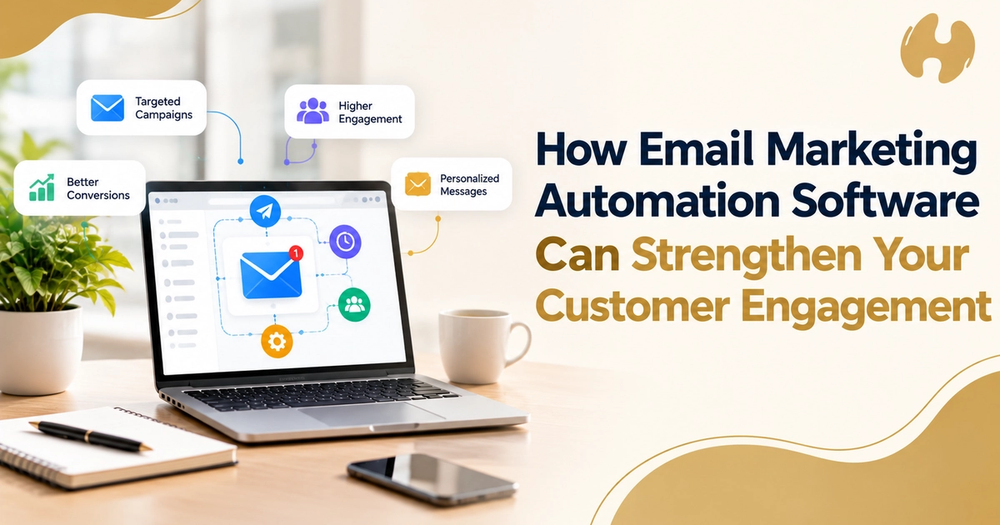
Email marketing automation software strengthens customer engagement when communication responds to what customers do and what is happening around them, rather than following a schedule. Context is what makes the difference.
A customer clicks a pricing email. The system records the click. But does the business know why they clicked, what happened before, or what should happen next?
Email activity is easy to measure. Customer context is harder to measure, but it determines whether the next message helps or irritates. A click is a signal, not the whole story. The rest of that story usually sits somewhere else in the wider business.
Email Is Only One Part of Engagement
Opens and clicks indicate that someone has noticed a message. They don't show whether the relationship is going well. Real engagement looks more like relevance, continuity and timely follow-up: the right reply after an enquiry, a useful nudge after a quote, silence when someone is mid-conversation with your team. More emails rarely mean more engagement. More relevant interactions can.
What Email Marketing Automation Software Automates
Email marketing software helps you create, schedule, send, and measure campaigns. Automation software adds triggers, behavioural logic, segmentation and workflows, so communication happens because of something the customer did or a stage they reached, not because someone remembered to press send.
Used well, automated email marketing covers welcome sequences, enquiry follow-ups, quote reminders, post-purchase messages, appointment reminders and re-engagement. Which triggers matter depends on your customers.
The Problem With Automating Without Context
Automation makes bad communication faster. When automation lacks real-time context, common breakdown scenarios occur:
- Post-Purchase Noise: A customer who has already bought stays in an active sales nurture sequence.
- Support Conflicts: Someone with an unresolved support complaint receives a promotional discount email.
- Sales Interference: A prospect who is already talking to a salesperson keeps receiving generic lead-nurture emails.
None of these is a shortage of automation. Each is a shortage of context.
Take the pricing click. The platform logs it, but if the CRM shows an active sales conversation, the right response probably isn't another marketing email. It may be to pause the nurture sequence, alert the salesperson, prepare a follow-up and update the record.
Email Shouldn't Be the Only Place That Knows the Customer
Useful context is scattered. The CRM holds the deal stage, support holds open tickets, the calendar holds booked meetings, accounting holds invoices and unpaid balances, and inboxes hold the conversations that explain why. If automation can't see any of it, it guesses. Not every email platform needs access to every system. The practical question is which information actually decides the correct next action, and whether the automation can reach it.
From Campaigns to Customer Journeys
Basic email campaign automation looks like this: send, wait, send, wait. A mature version works as a loop: a trigger, a customer action, updated context, then the next appropriate communication or task. If the customer books a meeting, the sequence stops. If a quote goes unanswered, a reminder is prepared for someone to approve. The journey follows the customer, not the calendar.
Where AI Adds Value
Drafting an email faster is the least interesting thing AI can do here. With access to the right history, it can summarise a customer's situation, spot a change in stage, suggest the next action and prepare the follow-up. That is different from generating a message. The value lies in understanding what should happen because of the customer's behaviour, and sensitive commercial decisions stay with people.
What to Look For Before You Choose
When choosing email marketing automation software, start with the customer journey rather than the feature page. The platform should respond to meaningful behaviour, not just opens, and draw on reliable customer data from the systems that provide important context. Measure success by more than just opens and clicks, and check that it supports the workflows you actually run.
Equally important is operational control: it should automatically stop or change a journey when the customer's situation changes, clearly show your team why an automation fired, and give you strict authority over permissions and suppression rules.
Automation Still Needs Good Rules
Automation is only as reliable as the data behind it. Segments need to be sensible, suppression lists current and unsubscribes honoured immediately. Where the consequences are significant, such as pricing, complaints or contract changes, a person should review before anything is sent. Automation should handle the routine and flag the rest.
FAQs
What is email marketing automation software?
Software that sends emails automatically based on customer behaviour, lifecycle stage or business events, such as an enquiry, a purchase or an unanswered quote. It adds triggers, segmentation and workflows to ordinary campaign sending.
How does automated email marketing improve engagement?
It makes communication timely and relevant; for example, responding promptly to an inquiry or sending a reminder before a quote expires. More volume doesn’t lead to better engagement. Messages that match the customer’s situation do.
How does email marketing software differ from automation software?
Practically, the difference is who acts. Ordinary software sends when someone schedules a campaign. Automation software sends when a customer does something, so it needs reliable customer data and clear rules about when to stop.
What can email campaign automation automate?
With the right connections, it can go beyond sending: alerting a salesperson when a prospect clicks pricing, pausing a sequence when a deal opens or creating a task when a quote goes quiet.
Can email automation work with CRM and customer data?
Yes, and it works better when it does. Many platforms offer CRM integrations, but check which fields, events and systems actually sync, because the data behind a trigger determines whether the next message makes sense.
Start With the Customer Journey, Not the Email
The goal isn't to send more emails. It is to make communication more relevant to what the customer has actually done and to make sure the follow-up happens. Talk to The Artificial Organisation about where email, customer information, and follow-up become disconnected in your business, and what could be connected or removed without replacing the software you already use.