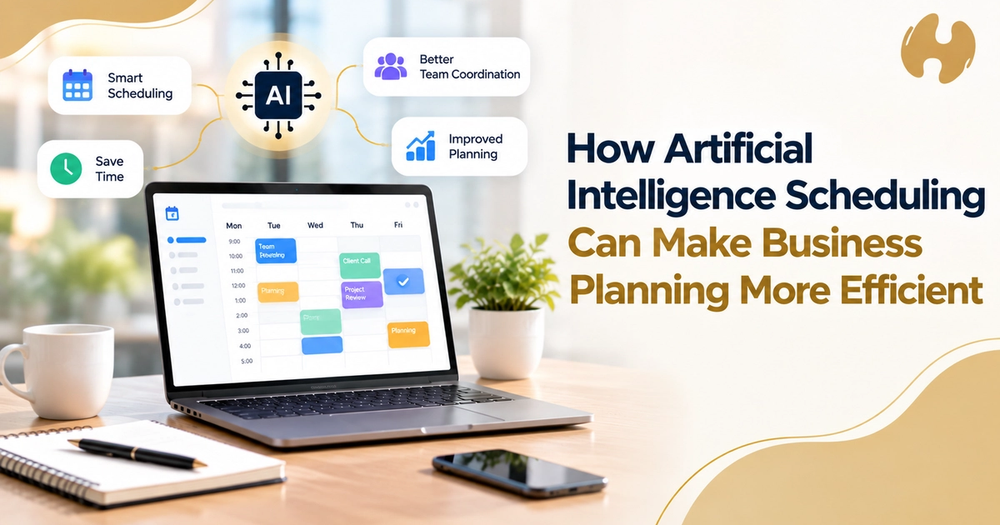
Artificial intelligence scheduling uses software to find suitable times, spot clashes, and rearrange plans when something changes. The better systems look at the work behind a booking and not just the gap it fills.
An empty slot on Tuesday at ten looks fine. Then you find the only person qualified for the job is across town, and the customer can't make it before noon.
Calendars show what is booked. They rarely say why or what the booking should set in motion. That missing context is where most planning problems start, and it's why simple booking tools so often fall short.
Scheduling Is More Than Finding an Empty Calendar Slot
A plumbing firm gets a request for a quote visit. Three diaries show Thursday afternoon free.
Nobody has checked who can price that kind of job, or whether the van is already out.
A free slot only tells you about a diary. Whether the time suits anyone depends on skills, location, deadlines, resources and priorities.
What Does Artificial Intelligence Scheduling Actually Do?
It reads scheduling information and helps with the decisions around it. It can find times, flag conflicts, compare availability, match people to jobs, and reschedule within the constraints you set.
It has no idea what matters unless you tell it. What it produces depends on the information, rules, and context it can see. Feed it poor inputs, and the suggestions will be confidently wrong.
Where AI Scheduling Removes Planning Bottlenecks
Finding a suitable time
The easiest gain is fewer messages. Instead of five emails to settle one visit, the system checks everyone's availability and offers options that already fit.
Handling changes
Schedules rarely break on day one. They break when a job overruns, someone cancels or an urgent request lands, and a single change can push three other bookings out of place.
Matching people to work
Availability is only the start. Operational scheduling may also need to weigh skills, travel distance, workload, and rules about who looks after which customers.
Coordinating the work around an appointment
A booking creates work. Someone prepares, someone confirms with the customer, and someone follows up. Software can only assist with the steps it can actually observe.
Calendar Data Does Not Explain the Booking
A calendar entry says 2 pm, site visit, Mrs Smith. It won't tell you that she complained last month, that the job needs two people, or that a quote has to follow.
That is operational context: customer history, earlier conversations, job requirements, responsibilities, deadlines, and where the work sits in the process. Artificial intelligence scheduling is only as sharp as the information behind it.
Does it need access to everything? No. The better question is which information actually decides the right answer.
AI Scheduling Tools Solve Different Problems
Meeting bookers let people pick a time. Calendar assistants tidy up one person's day. Task schedulers drop work into free hours, and workforce platforms build rosters. A connected operational system ties bookings to the work that follows.
The right AI scheduling tools depend on the problem you are trying to solve.
From Booking to Connected Business Planning
Take a site visit request. Someone checks availability, picks the right person, finds a slot, confirms with the customer, and adds the entry.
Then the employee gets notified, prep tasks are created, the job record is updated, and a follow-up is set. The appointment is only one step in a longer process.
The bigger gain comes when the request, the scheduling decision, the calendar, the tasks, the messages, and the follow-up move together as one chain. Few platforms cover all of it, so check what yours does.
Where People Still Decide
AI can optimise within those rules. People still decide when the rules should change.
Keep humans in charge of important customers, unusual requests, contractual deadlines, sensitive situations, major resource conflicts, and exceptions. Automation can handle the predictable coordination, while people approve anything with consequences.
What to Look For in AI Scheduling Software
Before you buy, put these questions to the provider:
- Does it take travel time and required skills into account, or only who is free?
- What happens when a job overruns or a client moves their appointment?
- Does it read from and write back to the CRM, service desk or database where your customer records live?
- Can it show why it suggested a particular slot?
- Who controls permissions, and how are approvals and exceptions handled?
Good AI scheduling software does more than find a gap in the diary. It understands the job behind the booking and copes when plans shift.
FAQs
What is artificial intelligence scheduling?
This is software that suggests good times, finds conflicts and modifies plans with your rules and business information, not just empty calendar slots.
How can AI scheduling enhance business planning?
Mostly by taking over the chasing. Nobody has to email five people to fix one visit, and double bookings get spotted while there's still time to move something. When a job runs late, the rest of the day can be reshuffled without someone redoing it by hand.
What is the difference between AI scheduling and conventional scheduling?
Conventional scheduling records the bookings people make. AI-assisted scheduling can suggest, compare and rearrange them against your constraints, with people signing off on the important decisions.
What can AI scheduling software automate?
It handles the repetitive parts of booking: suggesting times, confirming appointments, flagging clashes, telling staff about a new job and setting up follow-up tasks. How much depends on which systems it can reach.
Are AI scheduling tools suitable for small businesses?
Often yes, if the problem fits the tool. A small team buried in booking messages sees the benefit quickly. Complex rostering usually needs specialist software.
Ready to Plan the Work, Not Just the Calendar?
Better scheduling isn't about filling empty slots. It's about making sure the preparation, communication and follow-up actually happen.
When calendars, customer records, and task lists live in separate tools, plans break down. The Artificial Organisation connects these pieces so scheduling sits alongside your actual operations.
Talk to us about where your scheduling and follow-ups break down. [Book a call] to review your workflow and see how we can connect or simplify it.